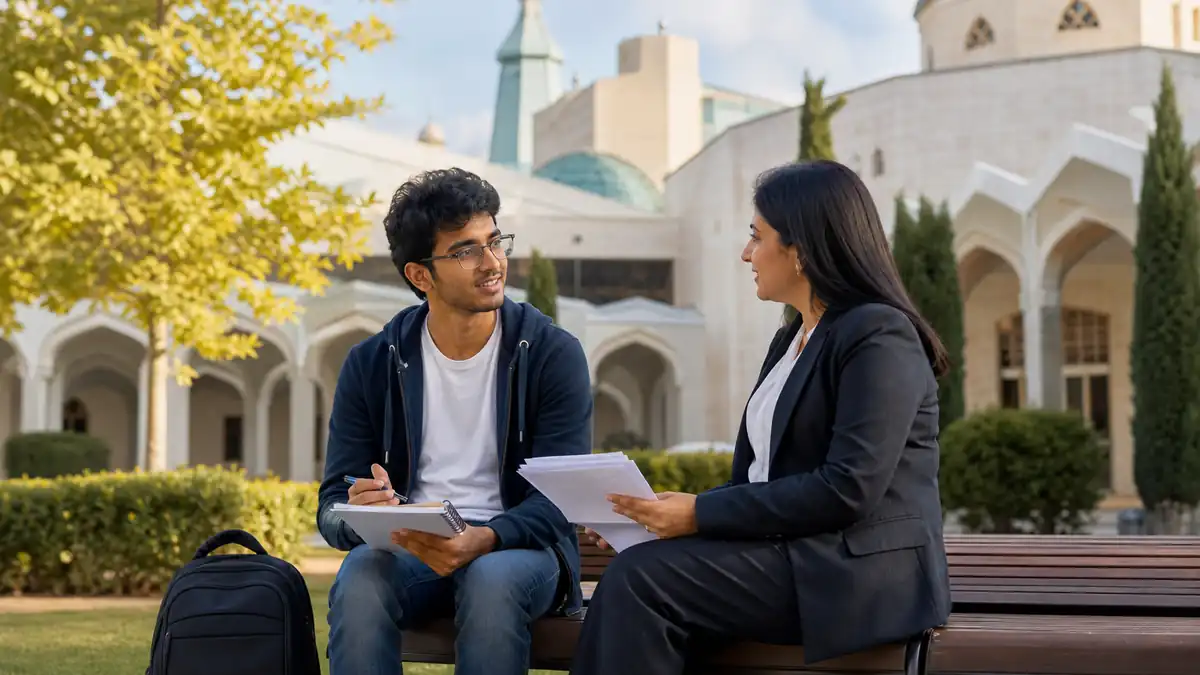
Getting admission to a Turkish medical university is not difficult — but it is unforgiving of missed deadlines and sloppy paperwork. Every year we meet students who lost a seat at their preferred university not because of marks, but because a document was not apostilled in time or an application window closed while they were "still deciding". This guide lays out the exact 2026 admission process for MBBS in Turkey, step by step, so that does not happen to you.
Step 0: Confirm You Are Eligible
Before touching any application form, make sure you clear the baseline:
- 10+2 with PCB — competitive universities effectively expect 70%+ in Physics, Chemistry and Biology; top faculties look higher.
- NEET qualification — non-negotiable for Indian students. Without a valid NEET score, the NMC will not register your foreign degree, no matter which country issued it. Full details in our post on NMC recognition of Turkish MBBS degrees.
- Age 17+ by admission.
Step 1: Shortlist Universities (January – March)
Turkey has two admission tracks and your shortlist decides which one you follow:
Compare fee structures against your total budget early — our Turkey fee breakdown and the country comparison tool make this quick. Shortlist two or three universities, never just one.
Step 2: Prepare Your Documents (March – May)
Start the document file early; this is where most delays happen. The standard set:
- 10th and 12th mark sheets and passing certificates
- NEET scorecard (qualifying year)
- Valid passport (make it now if you do not have one — Indian passport issuance can take weeks)
- Passport-size photographs against a white background
- Statement of purpose and, for some universities, a short CV
- YÖS or SAT scorecard, if applying to public universities
Academic documents must be apostilled (MEA apostille through authorised agencies) and, for some universities, translated into Turkish by a notarised translator. Universities will also ask for a notarised "equivalence" (denklik) of your school certificates after arrival — your counsellor should handle the sequencing so nothing is done twice.
Step 3: Submit Applications (April – June)
Applications are submitted online directly to each university's international office. Application windows for the September 2026 intake generally open around April and close between June and early August, but strong private-university programmes fill their international quota well before the official deadline. Submit early — an early, complete application often matters more than a marginally better percentage.
Step 4: Offer Letter and Fee Payment (June – July)
Private universities typically issue a conditional offer letter within one to three weeks of a complete application. To convert it into a final acceptance letter you pay the first-year tuition (or a defined deposit) via international bank transfer. Keep every SWIFT receipt — you will need them for the visa file. Public-university results follow their own YÖS-linked calendar and are announced in batches over the summer.
Step 5: Visa File and Travel (July – September)
With the final acceptance letter, you apply for a Turkish student visa at the embassy or consulate through the official channel. The visa process — appointment, financial proofs, insurance, timelines and the residence permit you must obtain after landing — deserves its own checklist, which we have published as a separate Turkey student visa guide for Indian MBBS students. Budget four to six weeks for the visa stage and book flights only after the visa is stamped.
Step 6: Arrival, Registration and Residence Permit
On arrival, the university's international office guides you through final enrolment: original document verification, equivalence certificate, university hospital health check, and the residence permit (ikamet) application, which must be filed within your visa validity. Hostel allocation happens in the same window. From NEET result to your first lecture in Istanbul, the whole journey takes roughly four months when managed properly.
Common Mistakes That Cost Students Their Seat
- Waiting for "one more" NEET counselling round in India and missing Turkish deadlines — run both processes in parallel.
- Applying to a single university with no backup.
- Leaving apostille and translation for July, when agencies are overloaded.
- Paying fees to agents' accounts instead of the university's official bank account — always pay the university directly.
- Ignoring the residence-permit deadline after arrival.
Running Indian Counselling and Turkey Applications in Parallel
The smartest families do not choose between Indian counselling and the Turkish application — they run both. Turkish private-university applications cost little and do not bind you: you can hold a conditional offer from Altınbaş or Medipol while your Indian state counselling plays out, and only convert the offer (by paying fees) once your Indian options are clear. What you cannot do is start the Turkish file in August after the last mop-up round — by then the international quota and visa slots are gone. The rule: apply to Turkey as if you will go, decide later whether you actually do.
YÖS in Brief — If You Want the Public-University Route
The YÖS is a logic-and-mathematics-heavy entrance exam used by Turkish public universities for international admissions; several universities also accept SAT scores instead. For Indian students it is very much preparable — the syllabus overlaps with quantitative aptitude far more than with NEET biology — but it needs three to six months of dedicated practice, and each university's YÖS is scored separately. If public-university fees (see the cost breakdown) justify the effort for your family, start YÖS preparation by January of the intake year at the latest.
Frequently Asked Questions
Can I apply before my 12th board results are declared?
Yes — universities accept applications with predicted or provisional marks and issue conditional offers, which are confirmed once final mark sheets arrive. This is exactly how you stay ahead of the deadline curve.
Do Turkish universities interview Indian applicants?
Most private universities decide on documents alone; a few programmes conduct a short online interview. It is a fit conversation, not an exam — know why you chose medicine and that university, and you will be fine.
Is there a January/spring intake for medicine in Turkey?
Medicine is effectively a September-only intake at the universities that matter. Anyone promising a "February MBBS batch" in Turkey deserves very careful verification.
How much are application fees?
Typically US$ 50–150 per university, sometimes waived through official admission partners. This is one of the few genuinely cheap stages of the journey.
What NEET score do I need for Turkey?
A qualifying NEET result satisfies the NMC requirement; Turkish universities themselves select on your 12th-grade academics (and YÖS/SAT for public seats). A higher NEET score does not directly buy a better Turkish seat — but stronger PCB marks do.
How Zenvia Education Manages This For You
Our Turkey admissions team handles shortlisting against your NEET score and budget, document preparation and apostille, direct university applications, offer-letter follow-up, visa filing and pre-departure briefing — with fee payments always made directly to the university. If you are targeting the September 2026 intake, the right time to start is now: book a free counselling session or contact us for a personalised admission timeline. Not sure Turkey is the right country yet? Start with our complete MBBS in Turkey guide or the Turkey vs Russia comparison.